


Outdoor Refrigerators in Las Vegas: What Survives the Summer

The most common appliance failure in a Las Vegas outdoor kitchen is not the grill. It is the refrigerator — specifically, an indoor or garage refrigerator that someone put in an island because it was cheaper, and that worked fine until the fourth consecutive day above 110 degrees. This article is about not doing that: what outdoor-rated means, which kind of unit belongs in a BBQ island, where to put it, and what we have seen hold up.
What "outdoor-rated" actually means
An outdoor refrigerator is not an indoor one with a stainless door. The differences are the whole product:
- A compressor sized for high ambient temperatures. An indoor refrigerator is designed for a 70-degree room. Ask it to hold 38 degrees inside when it is 112 outside and it runs continuously, overheats and fails. An outdoor-rated unit is built to hold temperature at ambient levels an indoor unit never sees.
- Sealed electrical components. Rated for moisture, dust and the washdown an outdoor kitchen gets.
- Stainless that resists corrosion and UV. Door, handle and cabinet, not just the fascia.
- Front ventilation. Built-in outdoor units draw and exhaust air through the front grille, so they can sit in a closed island without cooking themselves. An indoor unit vents at the back and suffocates in a cabinet.
- Safety certification for outdoor use. The listing that a licensed installation requires.
If a unit's specification does not say outdoor-rated, it is not. "Garage-ready" is not the same thing; a garage is shade.
Which type belongs in a BBQ island
Outdoor cold comes in more forms than people expect, and the right one depends on how the kitchen is used.
Undercounter refrigerator — 24 or 15 inches
The standard outdoor kitchen fridge. 24 inches fits most islands and holds a weekend's food and drink; 15 inches fits a bar, a narrow run or a second cold zone. Glass-door versions exist for anyone who wants to see the drinks.
Refrigerator drawers
Two drawers instead of a swing door. Better where a door would hit a leg or swing into a walkway, and better for organising — drinks in one, food in the other.
Beverage center and wine cooler
Dedicated to cans, bottles and wine at the right temperatures. The useful configuration for entertaining is a refrigerator for food plus a beverage center for drinks, because the fridge stays cold when nobody is opening it for a beer.
Kegerator
Single and dual-tap outdoor beverage dispensers, with the tower through the countertop. Rated for outdoors is essential here — the keg and the lines are a lot of thermal mass to keep cold.
Ice maker
Fifteen-inch outdoor ice machines make dense, slow-melting ice that matters in July. They need a water supply and a drain, which is the detail most often missed in a DIY island.
Freezer
Genuinely rare outdoors, and a few brands make one. It changes how the kitchen is used — frozen stock and ice cream within reach of the grill.
How much cold a kitchen actually needs
The mistake in both directions is common: one small fridge that is always full of drinks and never has room for the food, or a wall of refrigeration that runs all summer to keep six cans cold. A rough guide from the kitchens we build:
- A family that grills on weekends — one 24-inch undercounter refrigerator. Food and drink for a weekend, nothing more needed.
- A family that entertains a few times a month — a 24-inch refrigerator for food plus a 15-inch beverage center or refrigerator drawers for drinks. The food fridge stays closed and stays cold.
- A kitchen built for hosting — refrigerator, beverage center, ice maker and often a kegerator, each on its own circuit, placed so guests reach the drinks without crossing the cook.
- An outdoor bar — a beverage center and an ice maker, and often a wine cooler, with the food refrigeration back in the kitchen island.
Every unit added is another compressor running through the summer, so the right answer is the smallest set that covers how the space is used, not the largest the island can hold.
Where to put it
Placement decides whether an outdoor-rated unit lasts fifteen years or eight.
- Not next to the grill. Put at least a door or drawer stack between the fridge and anything that gets hot. Radiant heat through a shared island wall is a compressor's worst enemy.
- Out of direct afternoon sun if at all possible. A west-facing stainless door in July is a radiator. If the island faces west, consider drawers low in the island, or shade.
- With the ventilation clearance the manufacturer specifies. Front-venting units still need the front grille unobstructed and the cutout built to specification.
- On a dedicated GFCI circuit. Not shared with the rotisserie motor and the lights.
- Level. A refrigerator that is not level does not seal, and a door that does not seal runs continuously.
The brands we trust here
We stock outdoor refrigeration from most of the grill brands we carry, so an island can be finished in one brand, plus two refrigeration specialists.
- True — a commercial refrigeration company whose outdoor line is the most complete we carry: undercounter refrigerators and drawers, freezers, wine cabinets, beverage dispensers and a clear ice machine. The one we specify when the refrigerator matters more than the finish matching.
- Blaze — outdoor-rated 15 and 24-inch refrigerators, double-drawer refrigerators, beverage coolers and a 50-pound ice maker, matching the Blaze grills and doors.
- Lynx — professional 15 and 24-inch refrigerators, a refrigerator-freezer combination, two-drawer refrigerators, a wine cellar, an ice machine and beverage dispensers.
- Summerset — 15 and 24-inch outdoor-rated refrigerators, drawers, single and dual-zone wine coolers, a kegerator and an ice maker.
- DCS — 24-inch outdoor refrigerators and drawers, an ice machine and beer dispensers.
- Coyote and Twin Eagles — refrigerators and kegerators matching their grill lines.
- Zephyr — the Presrv outdoor refrigerator, beverage cooler and kegerator, plus outdoor range hoods.
Within that list the differences are build weight, compressor quality and the depth of the range. True and Lynx are the heaviest-built; Blaze and Summerset are the value-for-money choice that matches their grills; Zephyr is a specialist worth seeing for a beverage-focused bar.
What goes wrong, and how to avoid it
- The indoor fridge. Already covered. It will fail; the only question is which summer.
- The wrong cutout. Every unit has a specified opening and ventilation clearance. An island built before the fridge was chosen is where this goes wrong.
- No drain for the ice maker. Discovered after the island is finished, every time.
- A shared circuit. The fridge trips when the rotisserie starts. Dedicated GFCI circuit.
- No cover, no maintenance. Condenser coils full of desert dust make a compressor work twice as hard. Clean the front grille every season.
Planning it properly
Refrigeration is the appliance that most rewards being chosen before the island is drawn. The cutout, the ventilation, the circuit, the water and the drain all follow from which unit goes where, and all of them are easy during construction and demolition afterwards. We design, fabricate and install complete outdoor kitchens as a licensed Nevada contractor, which for refrigeration means those details are on the drawing. The units are on the floor at our S Fort Apache showroom, side by side, so you can feel the difference in door weight and build that the spec sheets do not show. Browse everything we carry, or come and open a few doors.
See Your Dream Outdoor Kitchen — Before You Build It
Our free AI designer turns your ideas into a concept rendering in about two minutes. Pick a layout, grill, and finishes — we'll take it from there.
Or see how we design and build custom outdoor kitchens in Las Vegas
Related Posts

Custom Fire Pits in Las Vegas: Gas, Masonry, Metal and Fire Tables
A fire pit is the cheapest way to make a Las Vegas patio usable in January. Here are the options — custom gas masonry pits, metal and steel pits, ready-made fire tables — and how to size, fuel and place one.
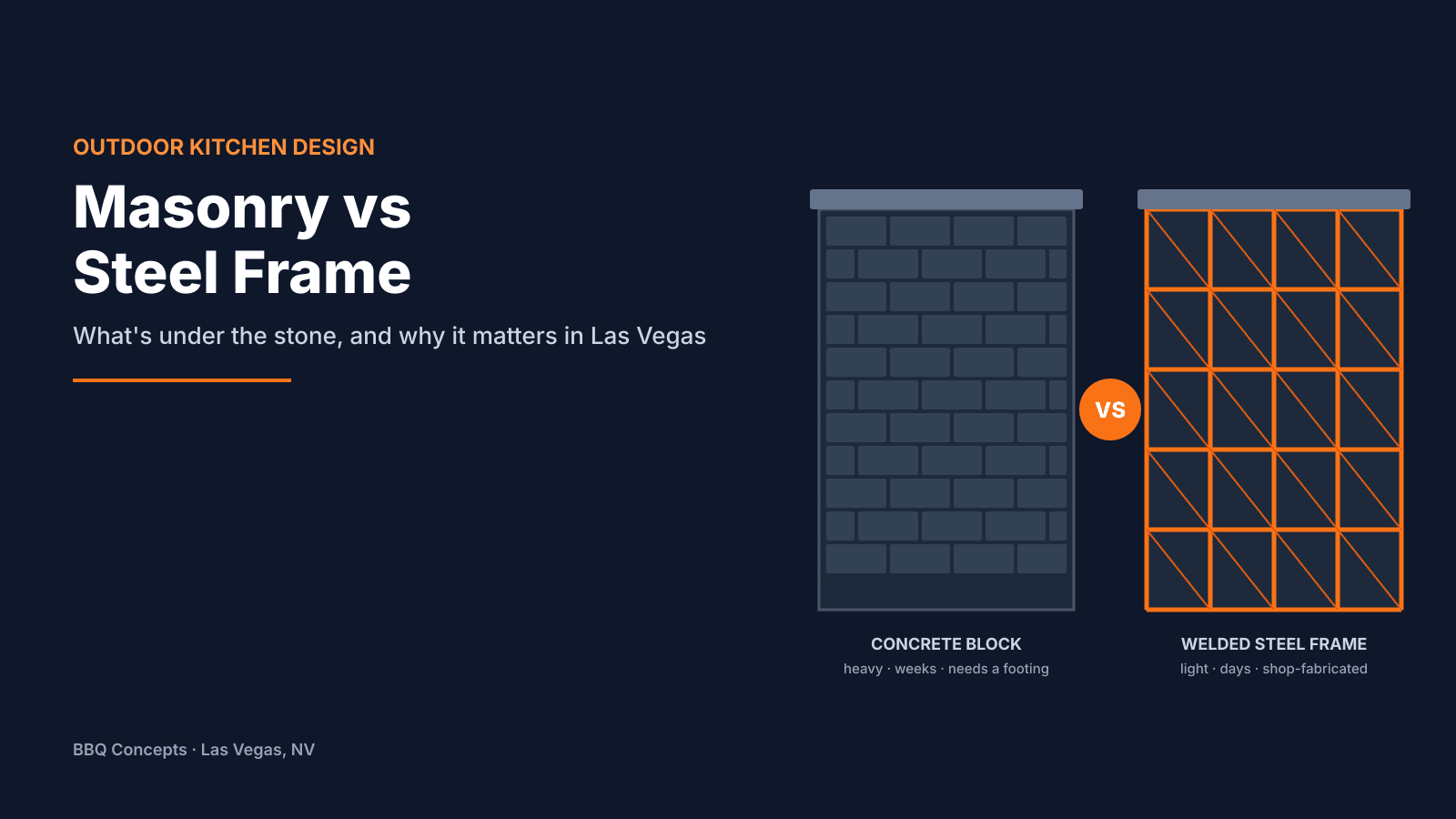
BBQ Island Construction in Las Vegas: Masonry vs Steel Frame
Every outdoor kitchen island is one of three things underneath the stone: block masonry, a welded steel frame, or a prefab shell. Here is how each is built, how it holds up in the desert, and the one method to avoid.
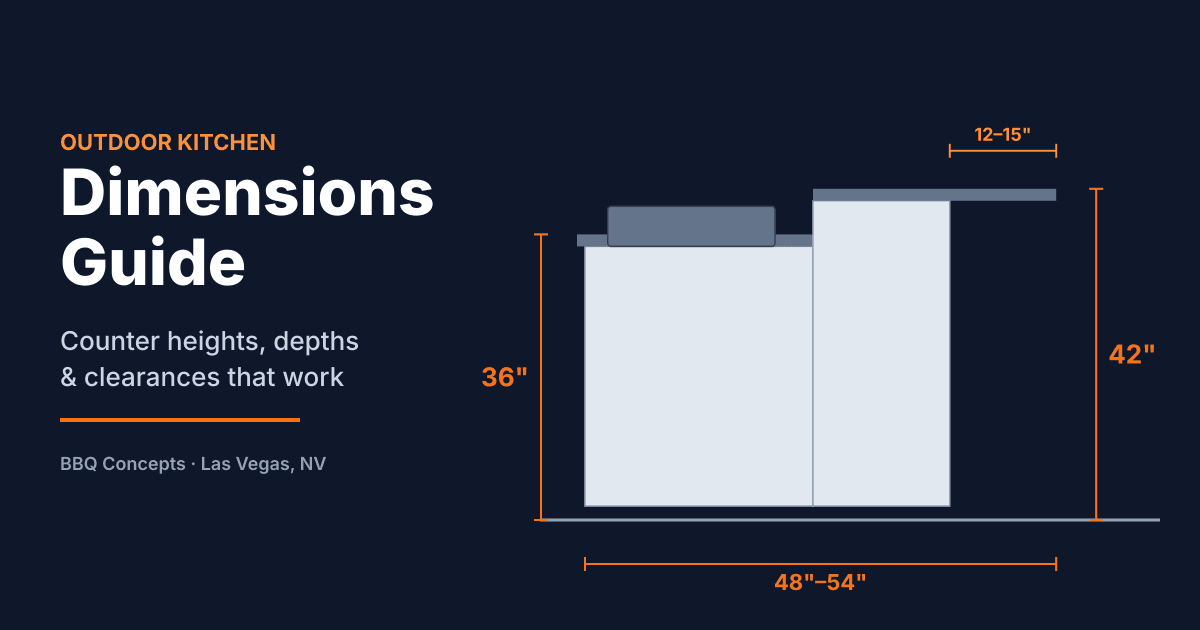
Outdoor Kitchen Dimensions: Counter Heights, Depths & Clearances
Standard counter and bar heights, island depths, seating overhangs, grill cutouts and the clearances that decide whether an outdoor kitchen is comfortable to cook in. The numbers we build to.