


Custom Fire Pits in Las Vegas: Gas, Masonry, Metal and Fire Tables

A Las Vegas evening in January is in the forties, and a patio without heat is a patio nobody uses for four months. A fire pit is the least expensive fix, and it is also the one with the most options — which is why the question "what kind of fire pit?" has a longer answer than most people expect. Here are the kinds that work here, what each involves to build, and the decisions that matter whichever you choose.
The four kinds of fire pit
Built-in gas masonry fire pit
The custom option. A concrete block structure, round, square or linear, finished in the same stacked stone, stucco or tile as the outdoor kitchen and the house, with a stainless burner inside and fire glass or lava rock on top. It is a permanent structure on a gas line, lit with a key valve or an electronic ignition, and it reads as part of the yard rather than something placed in it. This is what most of the fire pits we build are, and it is usually built with the kitchen so the gas run and the finish are one job.
Ready-made gas fire pit table
A finished unit — a fire pit built into a table at chat or dining height, with the burner, the glass and usually a tank enclosure for propane or a connection for natural gas. The Outdoor GreatRoom Company is the line we carry: linear, rectangular and square tables and bowls — Cove, Kenwood, Key Largo, Brooks, Uptown, Monte Carlo and more — in a range of finishes, including chat-height and dining-height versions of the same design. The fastest route to a fire feature, and the right one if the patio is finished and you do not want construction.
Metal and steel fire pits
Bowls and rings in steel — weathering steel that rusts to a stable patina, powder-coated steel, or stainless — either freestanding and wood-burning or set into a masonry surround with a gas burner. A bare steel fire pit is the look a lot of people are searching for, and it works here with two cautions: a thin steel bowl in direct Las Vegas sun gets hot enough to be a hazard in summer, and a wood-burning one is subject to burn restrictions (more below). What we do most often with metal is combine it: a steel ring or bowl as the fire element, in a masonry or steel-framed surround finished to match the kitchen. Our fabrication shop builds the surround and any custom stainless trim.
Full outdoor fireplace
Not a fire pit, but the same conversation. A full-height masonry fireplace anchors a patio in a way a pit cannot, and it is what to look at if you want a focal point and wind protection rather than a gathering circle. We cover it separately on our outdoor fireplaces page.
Gas or wood
Gas, almost always, in Las Vegas. Three reasons:
- Burn restrictions. Wood-burning outdoor fires in the Las Vegas valley are subject to air quality rules that vary with conditions and change over time. A gas fire pit is not. Check the current rules before planning a wood pit; a gas one avoids the question.
- Use. A gas pit lights in seconds and goes out in seconds. A wood pit is a project every time, and that is why most wood pits get used three times and then hold a planter.
- HOA. Many Las Vegas HOAs restrict or prohibit open wood fires and allow gas. Ask before you build either.
Natural gas if the line reaches the patio, propane with a concealed tank if it does not. Running a new gas line is normal work during a kitchen build and worth doing then.
Sizing the burner
A fire pit is a burner first. The burner size and output decide how much heat the pit throws and how large a flame it carries, and the pit is built around it.
- Fire rings — stainless rings from 12 to 30 inches for round pits. We carry them in each size from Exotic Fire Glass, along with the pan and components.
- H-burners — 12, 18 and 24-inch H-shaped burners for rectangular and linear pits.
- Linear burners — for the long, thin flame of a linear pit or table.
The rule of thumb is that the burner should be sized to the pit, not the other way around: a small burner in a big pit gives a candle in a crater. A pit that is meant to heat a seating circle needs more output than one that is meant to look pleasant. We size it to what the pit is for.
Fire glass, lava rock and what sits on top
Fire glass — tempered glass in reflective and non-reflective finishes, in colours from clear and amber to black, bronze, aqua and blended mixes — has largely replaced lava rock because it does not hold water, does not pop, and looks like something at night. Lava rock is cheaper and still fine, and some people prefer the look. Either way the media sits on a bed over the burner, with the depth set so the flame reads through it. Twenty-seven glass and burner options are in stock and on display.
Placement and clearances
This is where a fire pit goes right or wrong, and it is the reason to involve a contractor rather than a landscaper.
- Distance from the house, walls and fences. A gas fire pit needs clearance from any structure, and the required distance depends on the pit's output and design.
- Distance from a patio cover or pergola. A fire feature under a cover is possible but needs height, ventilation and a design that keeps heat off the ceiling. If you have or want a patio cover, plan the pit and the cover together.
- Seating distance. Chairs want to be close enough to feel heat and far enough that the person nearest the flame is not roasting. A pit sized for the circle, not the circle squeezed around the pit.
- Wind. A low wall, a fireplace or a well-placed seat wall behind the pit makes a difference on a winter evening in a way a bare pit in the middle of a lawn does not.
- Ventilation in the structure. A gas pit's enclosure must vent so gas cannot collect inside. This is code, not an option.
Permits
Gas work generally requires a permit in Clark County, and masonry structures can depending on size and placement. As a licensed Nevada contractor we pull the permits and have the gas inspected, so the pit is legal, insurable and safe — which matters the day the house is sold, if not before.
Fire pit as part of an outdoor kitchen
The best fire pits we build are planned with the kitchen: the gas run is sized for the grill and the pit together, the finish matches the island, and the seating is laid out so the cook and the guests are in the same space. The outdoor kitchen build is the place to start if the pit is one part of a larger project. If the patio is already done and you want a fire feature without construction, a GreatRoom fire table on a propane tank can be on the patio in a week.
Both are on display at our S Fort Apache showroom — the fire tables lit, the burners and glass in every size. Bring a photo of the patio and we will tell you which of the four makes sense, and what it takes to build it.
See Your Dream Outdoor Kitchen — Before You Build It
Our free AI designer turns your ideas into a concept rendering in about two minutes. Pick a layout, grill, and finishes — we'll take it from there.
Or see how we design and build custom outdoor kitchens in Las Vegas
Related Posts

Outdoor Refrigerators in Las Vegas: What Survives the Summer
An indoor fridge in an outdoor kitchen here runs for a summer and then dies. Here is what outdoor-rated actually means, which type belongs in a BBQ island, where to put it, and the brands that hold up.
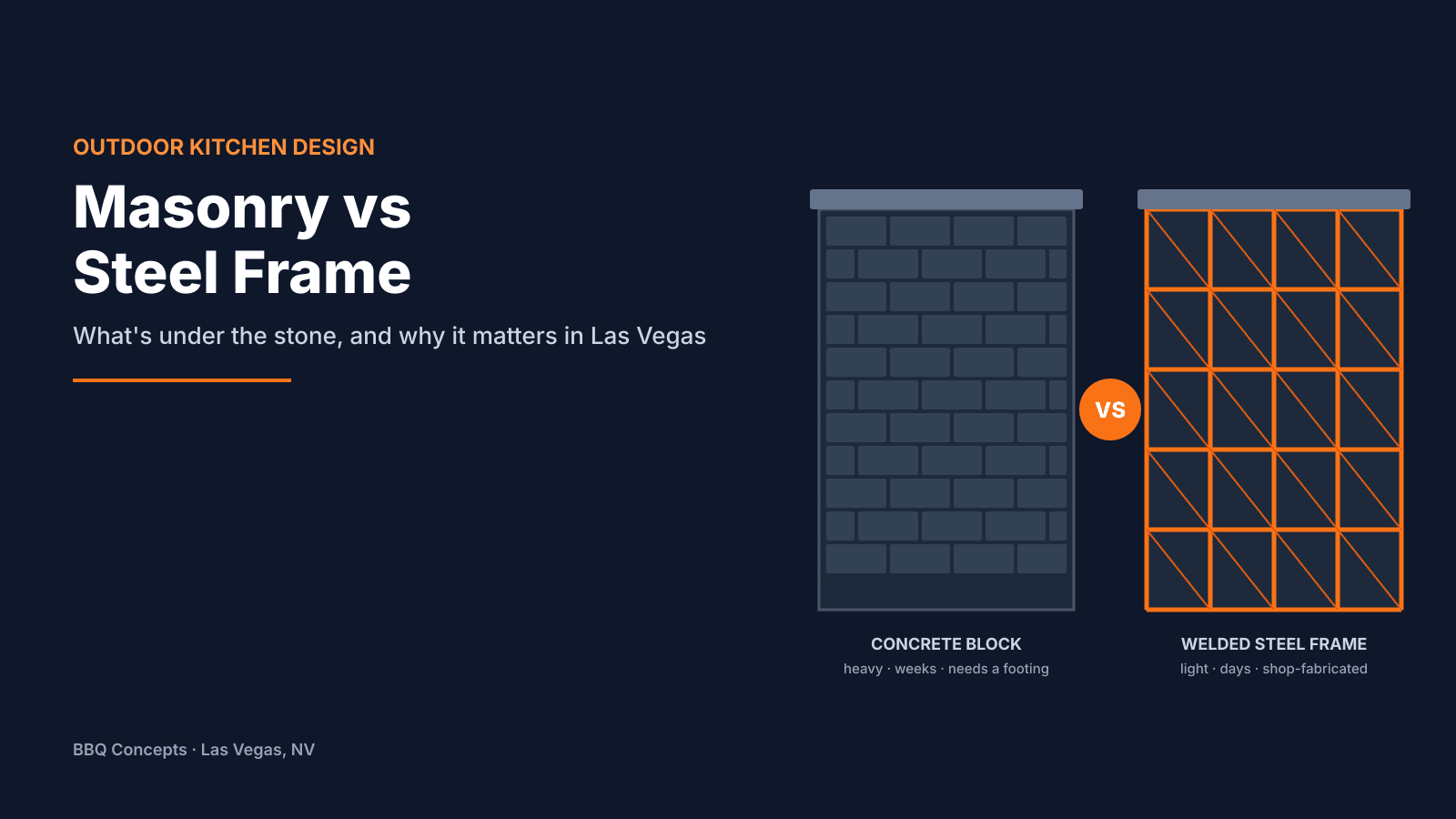
BBQ Island Construction in Las Vegas: Masonry vs Steel Frame
Every outdoor kitchen island is one of three things underneath the stone: block masonry, a welded steel frame, or a prefab shell. Here is how each is built, how it holds up in the desert, and the one method to avoid.
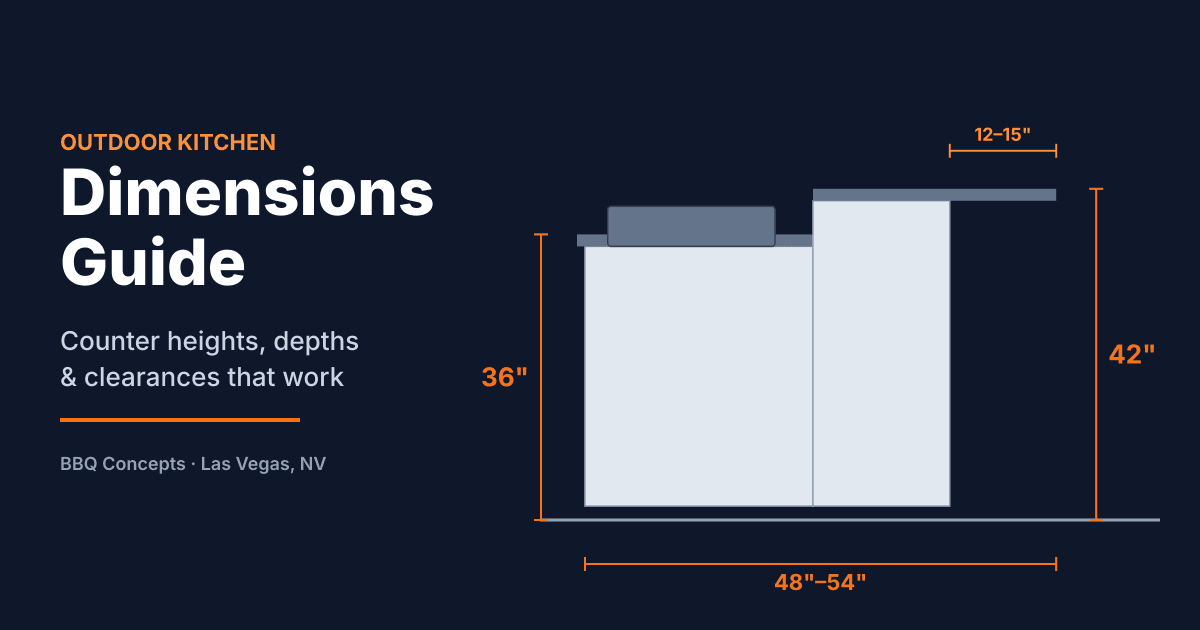
Outdoor Kitchen Dimensions: Counter Heights, Depths & Clearances
Standard counter and bar heights, island depths, seating overhangs, grill cutouts and the clearances that decide whether an outdoor kitchen is comfortable to cook in. The numbers we build to.