


Blaze vs Napoleon: Which Grill Suits Your Outdoor Kitchen?
These two come up together in our showroom most weeks, and the honest answer is usually less about which grill is better and more about what you are actually building. Blaze and Napoleon are optimised for different installations, and once you see that, the choice mostly makes itself.
We stock both, so we have no reason to steer you either way.
The short answer
- Building a masonry island? Blaze, almost always. The built-in range is deeper and the matching component line means the whole kitchen lines up.
- Want a grill on a cart, or a grill with serious burner technology? Napoleon. Its strength is freestanding units with infrared burners and a rotisserie as standard rather than an afterthought.
- Want a built-in with Napoleon's burners? That exists — the Built-In Prestige range — but it is a much narrower selection than Blaze offers.
Where each one is actually aimed
Blaze is a built-in system
Of the 115 Blaze products we carry, the large majority are designed to drop into an island, and the catalogue goes well past grills: access doors, drawer stacks, trash pullouts, refrigeration, side and power burners, vent hoods, insulated jackets. The built-in families run Prelude and LTE at the entry, LTE+ adding interior lighting and backlit knobs, LTE PRO stepping up the cooking hardware in 32-inch and 40-inch, and LUX at the top in 34-inch and 44-inch.
That breadth is the point. A kitchen built entirely from one manufacturer's components has matching door reveals, matching drawer faces and one stainless finish — not three that nearly match. Browse the full Blaze range to see how deep the component line goes.
Napoleon is a cooking-technology brand
Our Napoleon range is mostly freestanding — Prestige 500 and 665, Prestige PRO 500 and 665, and the Rogue XT series in 425, 525 and 625. The built-in selection is three units: Built-In Prestige 500 RB, Built-In Prestige PRO 500 RB and Built-In Prestige PRO 665 RB.
What you are paying for is burner engineering. Napoleon's RSIB models carry both a rear infrared burner for the rotisserie and an infrared side burner — the latter reaching searing temperatures a conventional burner cannot. The rotisserie is included rather than an add-on, and the Phantom Prestige 500 Connected adds app control. See the Napoleon range.
Side by side
| Blaze | Napoleon | |
|---|---|---|
| Built for | Built-in islands | Freestanding, plus 3 built-ins |
| Body material | 304 stainless | 304 stainless |
| Built-in widths | 23"–44" across four families | 500 and 665 series |
| Infrared burners | On some models | Core to the RSIB range |
| Rotisserie | Available | Included on RSIB/RB models |
| App control | No | Phantom Prestige 500 Connected |
| Matching components | Extensive — 115 products | Limited |
| Best suited to | A whole outdoor kitchen | A great grill |
Construction
Both use 304 stainless in their main bodies, which is the grade that matters — 430 stainless will surface-rust in a few Las Vegas seasons and plenty of grills in this price neighbourhood use it. Neither brand does.
The difference is in approach. Blaze puts its budget into heavy, simple, serviceable construction: cast burners, solid welded seams, few moving parts. Napoleon puts more into features — infrared burners, ignition systems, the rotisserie package — which means more to go right and, over fifteen years, marginally more to go wrong. Neither is the wrong choice; they are different bets.
If you intend to keep the grill for fifteen or twenty years, that distinction is worth thinking about honestly. Simple things fail less and are cheaper to fix. Feature-rich things are better to use. Most people are happier with the feature-rich option for the first decade and the simple one for the second.
What breaks, and what that costs you
Nobody asks this in the showroom and everybody should. On any gas grill, the parts that fail in a desert climate are predictable: burners, igniters, and heat deflectors or flame tamers. Grates eventually go too.
Blaze's advantage here is parts simplicity — fewer distinct components, and a design that assumes you will replace burners once or twice in the grill's life. Napoleon's infrared burners are a more specialised part. Neither is a problem while the brand supports the model; it becomes a problem when a unit is discontinued and parts dry up.
That is a genuine argument for buying from a local dealer rather than the cheapest online listing. When an igniter fails in year six, the question is whether anyone within driving distance knows the model and can get the part. We stock both brands and service what we sell.
Heat, which is not a footnote here
A grill in Las Vegas lives through 110°F summers and relentless UV. Two practical consequences for this comparison:
- Covers matter more than people expect. UV degrades knobs, gaskets and any plastic or rubber component far faster here than in a temperate climate. Both brands offer covers; use one.
- Built-in beats freestanding for longevity, all else equal — a grill sunk into masonry under a patio cover is simply less exposed than a cart standing in the open. If you are leaning Napoleon freestanding, think about where it will actually sit.
Sizing and cutouts
If the grill is going into an island, this matters more than the badge. Blaze cutouts across the built-in range run 23.25", 28.25", 30.625", 30.75", 32.25", 37.5", 38", 38.375" and 42.5". Napoleon's built-ins have their own, different, cutout dimensions.
Choose the grill first, then build the island to its cutout sheet. Not the reverse. We have written up the standard numbers in our outdoor kitchen dimensions guide, which is worth reading before anyone pours concrete.
What about Weber?
This comparison comes up alongside Weber constantly, and we have answered that separately in Weber grill alternatives rather than repeat it here. The short version: Weber makes excellent freestanding grills and does not seriously compete in the built-in market, which is where most of our customers end up.
How we would actually advise you
Choose Blaze if you are building an outdoor kitchen rather than buying a grill; if you want the doors, drawers and refrigeration to match; or if you want the most built-in capability for the money.
Choose Napoleon if the grill is going on a cart or a patio rather than into masonry; if infrared searing and a proper rotisserie are things you will genuinely use; or if you want app connectivity.
Choose either for 304 stainless construction that will survive the desert.
Where people go wrong is buying a freestanding grill and then deciding a year later to build an island around it. If a kitchen is anywhere in your plans, buy the built-in from the start — retrofitting a cart grill into masonry rarely works and never looks right.
See them side by side
Both are on the floor at our S Fort Apache showroom. Ten minutes opening doors and feeling the weight of the lids settles this faster than any comparison table — including this one. We also design, fabricate and install the kitchen the grill goes into as a licensed and insured Nevada contractor, so the cutout is right the first time and the gas is sized and permitted properly.
If you are at the sketching stage, the outdoor kitchen designer will give you a layout to react to, or see how a full build comes together.
See It In Person Before You Buy
Every grill we write about is on our showroom floor on Fort Apache. Come compare them side by side, or ask us anything about pricing and availability.
Building it in? See our custom outdoor kitchens in Las Vegas
Related Posts
Summerset Grills Review: An Honest Look From a Dealer
We sell Summerset, so take this with the appropriate salt — but here is where the brand genuinely sits, which line is worth the step up, and who should buy something else.

Weber Grill Alternatives: How Blaze, Napoleon & Lynx Compare
We don't carry Weber — on purpose. Here's an honest comparison of the built-in grill brands we do carry, and which one fits which kind of griller.
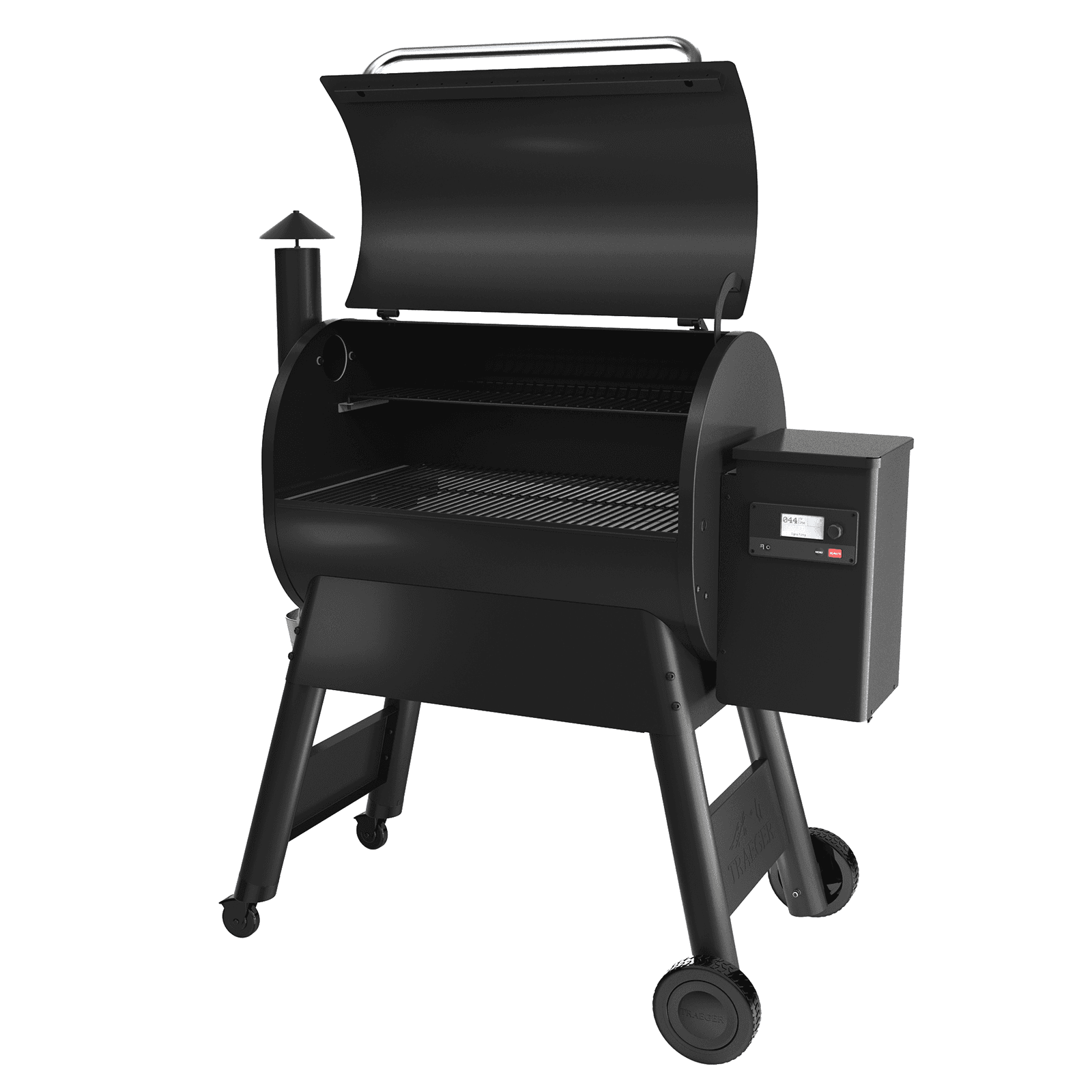
Traeger Pro 780 – Review – BBQ Concepts
BBQ Concepts is the Las Vegas expert on outdoor kitchens, barbecue grills, and smokers. We are excited to review some of the details about the new Traeger Pro 780 Wood Pellet Grill.